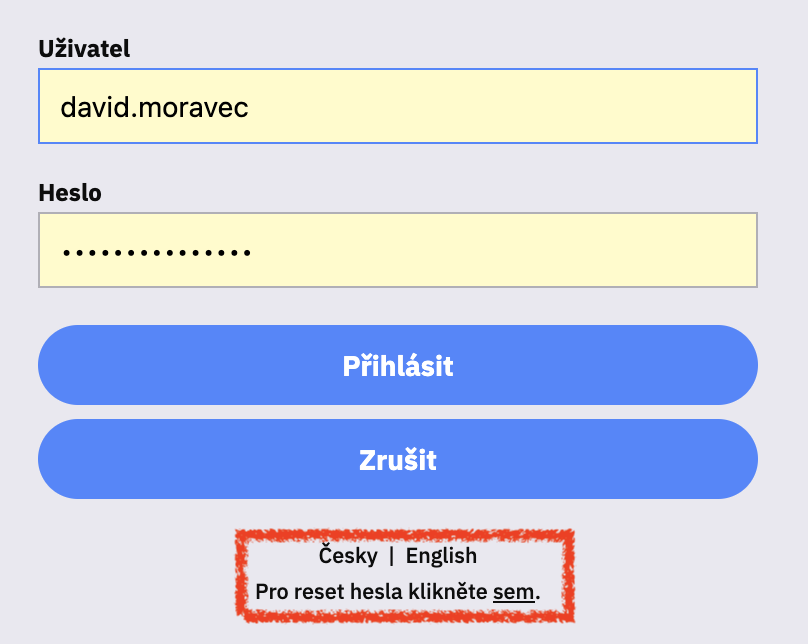
I have ORIGAM version 2025.5.3.3864 release and I tried to configure PasswordReset for users. There is no problem switching it on in appsettings.json config file. Then link to ask for reseting the password appears on login page like so
After going to reset password link user is asked for email address like so
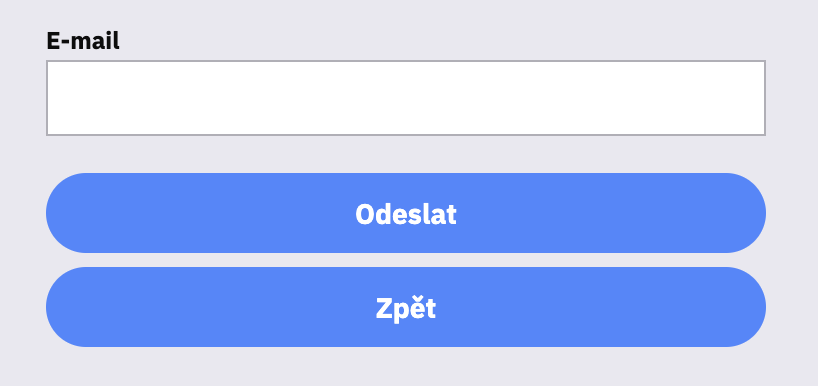
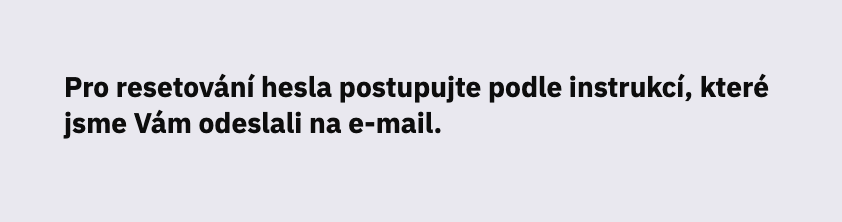
When entering email address there is always message that email has been sent. If you enter not existing email address, no mail is sent. If you enter existing email address, email is correctly sent. Here I must say I would rather know that incorrect email address is not valid.
And now the real fun begins. When opening URL link from email you get to such a page
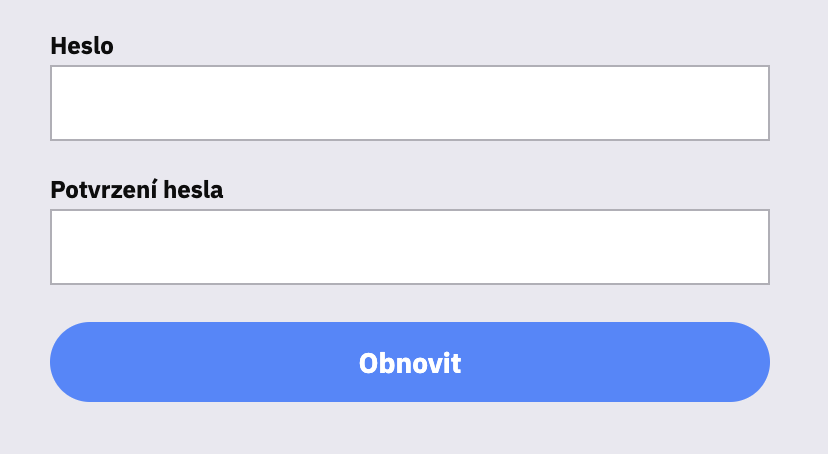
When you enter Password and Password confirmation you get correctly an error. So far so good. But the thing is that it requires minimum password length even though I have configured PasswordConfig.RequiredLength = 12 according to documentation https://community.origam.com/t/pre-2025-11-appsettings-json-documentation/1836#p-5937-passwordconfig-7
BUG 1: It seems it does not respect PasswordConig settings section from appsettings.json at all. Does not for example for lower or upper case letter etc.
Expected result/solution: PasswordConig settings should be respected as it is set up.
BUG 2: When I enter password longer than 6 and shorter than 12 I get an error like this
Expected result/solution: PasswordConig settings should be respected as it is set up.
When once password that complies with password rules is entered, it is correctly changed and screen with link to login page correctly displayed. See picture

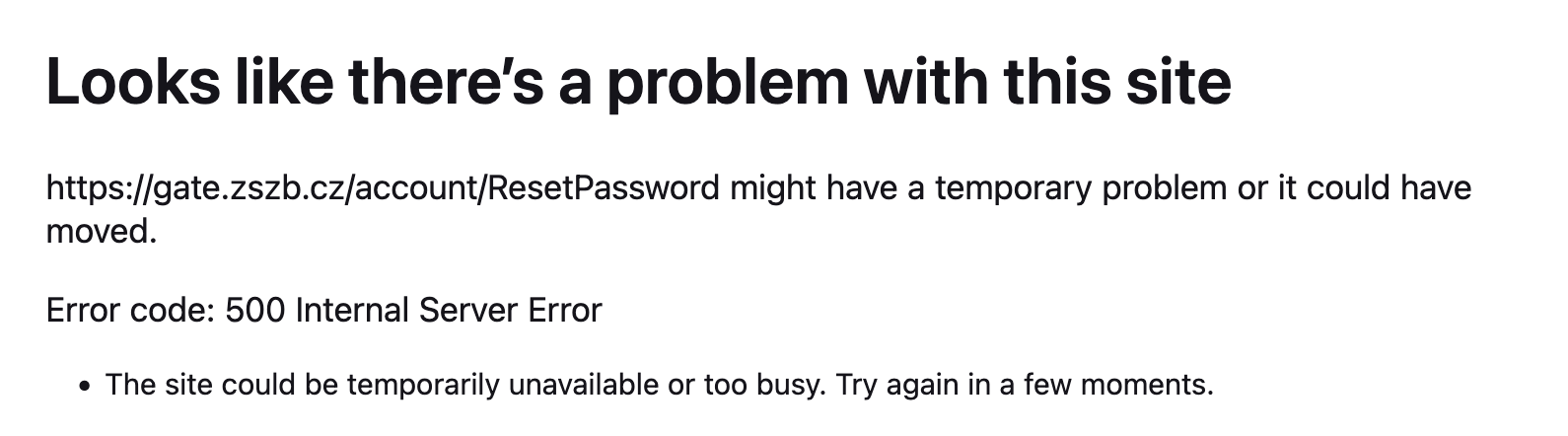
BUG 3: But when u use the same successfully already used reset link, you get again server error 500.
Server 500 internal error is accompanied by this log:
2026-01-22 19:20:36,163 [44] ERROR Microsoft.AspNetCore.Server.IIS.Core.IISHttpServer - Connection ID “18230571296696041517”, Request ID “4000002e-0001-fd00-b63f-84710c7967bb”: An unhandled exception was thrown by the application.
System.InvalidOperationException: The exception handler configured on ExceptionHandlerOptions produced a 404 status response. This InvalidOperationException containing the original exception was thrown since this is often due to a misconfigured ExceptionHandlingPath. If the exception handler is expected to return 404 status responses then set AllowStatusCode404Response to true.
—> System.NullReferenceException: Object reference not set to an instance of an object.
at AspNetCoreGeneratedDocument.Views_Account_ResetPassword.b__18_0()
at Microsoft.AspNetCore.Razor.Runtime.TagHelpers.TagHelperExecutionContext.GetChildContentAsync(Boolean useCachedResult, HtmlEncoder encoder)
at Microsoft.AspNetCore.Mvc.TagHelpers.RenderAtEndOfFormTagHelper.ProcessAsync(TagHelperContext context, TagHelperOutput output)
at Microsoft.AspNetCore.Razor.Runtime.TagHelpers.TagHelperRunner.g__Awaited|0_0(Task task, TagHelperExecutionContext executionContext, Int32 i, Int32 count)
at AspNetCoreGeneratedDocument.Views_Account_ResetPassword.ExecuteAsync()
at Microsoft.AspNetCore.Mvc.Razor.RazorView.RenderPageCoreAsync(IRazorPage page, ViewContext context)
at Microsoft.AspNetCore.Mvc.Razor.RazorView.RenderPageAsync(IRazorPage page, ViewContext context, Boolean invokeViewStarts)
at Microsoft.AspNetCore.Mvc.Razor.RazorView.RenderAsync(ViewContext context)
at Microsoft.AspNetCore.Mvc.ViewFeatures.ViewExecutor.ExecuteAsync(ViewContext viewContext, String contentType, Nullable1 statusCode) at Microsoft.AspNetCore.Mvc.ViewFeatures.ViewExecutor.ExecuteAsync(ViewContext viewContext, String contentType, Nullable1 statusCode)
at Microsoft.AspNetCore.Mvc.ViewFeatures.ViewExecutor.ExecuteAsync(ActionContext actionContext, IView view, ViewDataDictionary viewData, ITempDataDictionary tempData, String contentType, Nullable1 statusCode) at Microsoft.AspNetCore.Mvc.ViewFeatures.ViewResultExecutor.ExecuteAsync(ActionContext context, ViewResult result) at Microsoft.AspNetCore.Mvc.ViewResult.ExecuteResultAsync(ActionContext context) at Microsoft.AspNetCore.Mvc.Infrastructure.ResourceInvoker.<InvokeNextResultFilterAsync>g__Awaited|30_0[TFilter,TFilterAsync](ResourceInvoker invoker, Task lastTask, State next, Scope scope, Object state, Boolean isCompleted) at Microsoft.AspNetCore.Mvc.Infrastructure.ResourceInvoker.Rethrow(ResultExecutedContextSealed context) at Microsoft.AspNetCore.Mvc.Infrastructure.ResourceInvoker.ResultNext[TFilter,TFilterAsync](State& next, Scope& scope, Object& state, Boolean& isCompleted) at Microsoft.AspNetCore.Mvc.Infrastructure.ResourceInvoker.InvokeResultFilters() --- End of stack trace from previous location --- at Microsoft.AspNetCore.Mvc.Infrastructure.ResourceInvoker.<InvokeNextResourceFilter>g__Awaited|25_0(ResourceInvoker invoker, Task lastTask, State next, Scope scope, Object state, Boolean isCompleted) at Microsoft.AspNetCore.Mvc.Infrastructure.ResourceInvoker.Rethrow(ResourceExecutedContextSealed context) at Microsoft.AspNetCore.Mvc.Infrastructure.ResourceInvoker.Next(State& next, Scope& scope, Object& state, Boolean& isCompleted) at Microsoft.AspNetCore.Mvc.Infrastructure.ResourceInvoker.InvokeFilterPipelineAsync() --- End of stack trace from previous location --- at Microsoft.AspNetCore.Mvc.Infrastructure.ResourceInvoker.<InvokeAsync>g__Awaited|17_0(ResourceInvoker invoker, Task task, IDisposable scope) at Microsoft.AspNetCore.Mvc.Infrastructure.ResourceInvoker.<InvokeAsync>g__Awaited|17_0(ResourceInvoker invoker, Task task, IDisposable scope) at Microsoft.AspNetCore.Builder.RouterMiddleware.Invoke(HttpContext httpContext) at Microsoft.AspNetCore.Authentication.AuthenticationMiddleware.Invoke(HttpContext context) at Origam.Server.Middleware.FatalErrorMiddleware.Invoke(HttpContext context) at IdentityServer4.Hosting.IdentityServerMiddleware.Invoke(HttpContext context, IEndpointRouter router, IUserSession session, IEventService events, IBackChannelLogoutService backChannelLogoutService) at IdentityServer4.Hosting.MutualTlsEndpointMiddleware.Invoke(HttpContext context, IAuthenticationSchemeProvider schemes) at Microsoft.AspNetCore.Authentication.AuthenticationMiddleware.Invoke(HttpContext context) at IdentityServer4.Hosting.BaseUrlMiddleware.Invoke(HttpContext context) at Microsoft.AspNetCore.Localization.RequestLocalizationMiddleware.Invoke(HttpContext context) at Microsoft.AspNetCore.Diagnostics.ExceptionHandlerMiddlewareImpl.<Invoke>g__Awaited|10_0(ExceptionHandlerMiddlewareImpl middleware, HttpContext context, Task task) --- End of inner exception stack trace --- at Microsoft.AspNetCore.Diagnostics.ExceptionHandlerMiddlewareImpl.HandleException(HttpContext context, ExceptionDispatchInfo edi) at Microsoft.AspNetCore.Diagnostics.ExceptionHandlerMiddlewareImpl.<Invoke>g__Awaited|10_0(ExceptionHandlerMiddlewareImpl middleware, HttpContext context, Task task) at Microsoft.AspNetCore.Server.IIS.Core.IISHttpContextOfT1.ProcessRequestAsync()Expected result/solution: show error/warning message that link has alredy been used and/or is epired.
Such a described behaviour is not transparent for end users and is very non-intuitive and confusing, leading to reporting errors instead of achieving simle straight forward and smooth password reset.
I would like to declare, that this is completely build-in functionality used out of the box. Id did nothing special or extra then configured and used ORIGAM.
If any need for more testing and/or deeper explanation feel free to as or contact me directly.